Starting marketing from scratch but don’t know where to start?
If you’re asking yourself “where do I even start marketing my small business?” you’re not alone. Analysis paralysis is real and it’s one of the biggest reasons small businesses don’t take the next step.
This guide is here to help you cut through the noise, simplify the process, and move forward with confidence.
Where to Start Marketing Your Small Business
When you’re starting marketing for the first time, the goal isn’t to do everything. It’s to do the right first few things so you don’t waste time or money.
Here’s where to focus.
Start with one clear goal
Before you touch a platform or spend a dollar, decide what you want marketing to do.
For most small businesses, that goal is one of these:
-
More phone calls
-
More bookings
-
More purchases
If your goal is something vague like “more awareness” or “growth,” it becomes almost impossible to tell if marketing is working. Pick one outcome you actually care about and use that as your north star.
Everything else should support that goal.
Make sure you can track it
You don’t need fancy dashboards or complicated tools, but you do need visibility.
At a minimum, you should be able to answer:
-
How many inquiries did we get this month?
-
Where did they come from?
That might be:
-
Form submissions
-
Phone calls
-
Booking requests
If you can’t track results, marketing turns into guessing, and guessing usually gets expensive fast.
Be realistic about your budget
One of the biggest mistakes small businesses make is underfunding marketing and expecting big results.
Before you start, decide:
-
What you can realistically spend each month
-
How long you’re willing to give it before judging performance
A smaller budget that runs consistently almost always performs better than a larger budget that gets turned on and off when things feel slow.
Marketing needs time to work.
Look at what’s already working for others
You don’t need to reinvent the wheel.
One of the simplest ways to figure out where to start marketing your business is to look at competitors who are one step ahead of you, not ten steps ahead.
Pay attention to:
-
Who shows up when you search for your service
-
What their website focuses on
-
How they position themselves
-
What kind of offers or messaging they’re using
If something is clearly working for them, there’s a good chance it could work for you too. The goal isn’t to copy — it’s to understand what the market already responds to.
Pick one channel and focus
You don’t need to be everywhere. You need to be consistent somewhere.
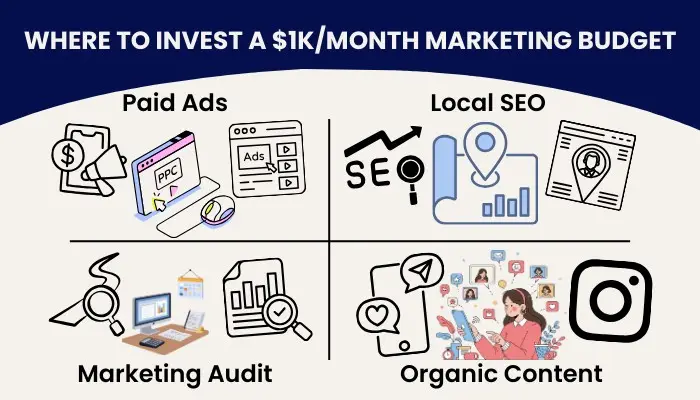
Choose one primary channel based on how customers actually find you:
-
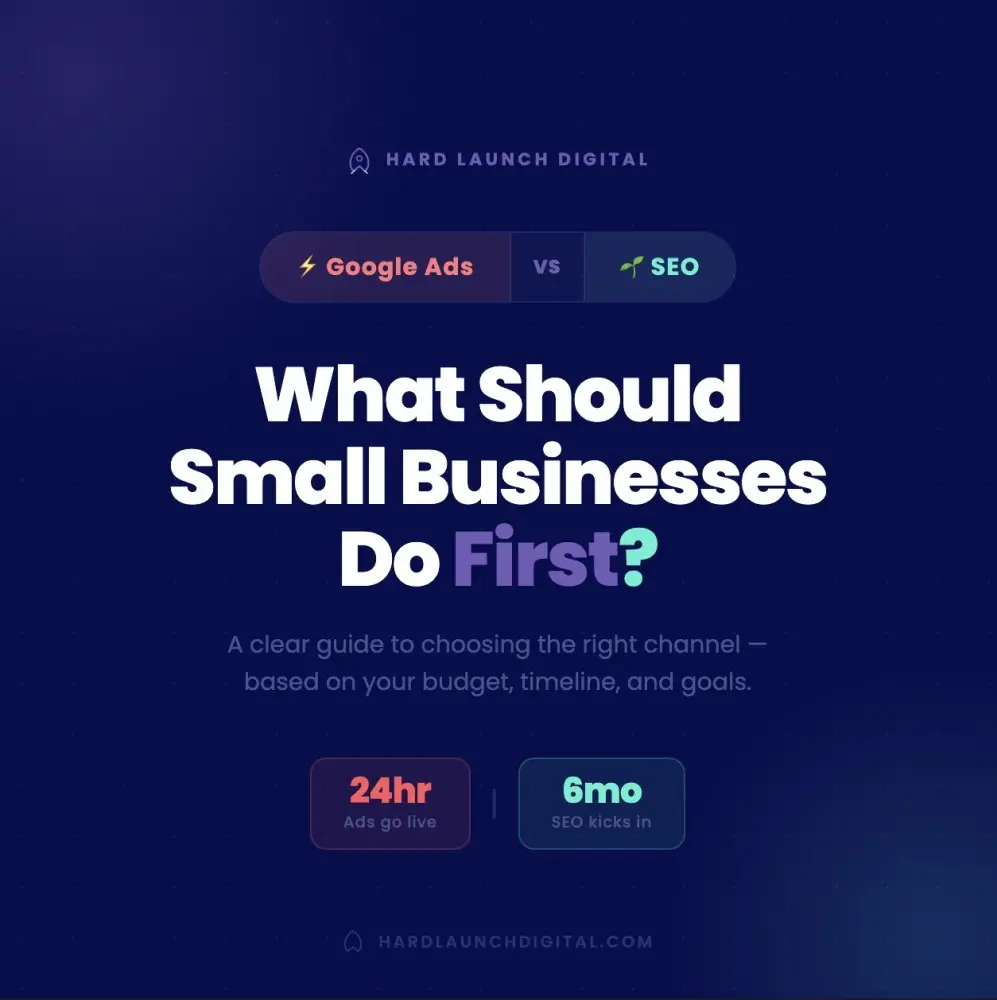
Google Ads if people are actively searching for what you offer
-
Local SEO if you rely on nearby customers
-
Social media if your business is visual or relationship-driven
When you’re starting marketing from scratch, one focused channel will almost always outperform five half-finished ones.
Get the right level of support
This doesn’t automatically mean hiring an agency.
Support can look like:
-
A consultant to help you set things up correctly
-
A freelancer to handle execution
-
A clear checklist or framework so you’re not winging it
Trying to figure everything out on your own often leads to stalled progress or wasted spend. Having some level of support helps you move faster and avoid common mistakes.
Use a simple checklist
Marketing feels overwhelming when everything lives in your head.
A simple checklist helps you:
-
Stay focused
-
Track what’s been done
-
Avoid jumping between tactics too quickly
It doesn’t need to be complicated it just needs to exist.
The bottom line
Starting marketing from scratch isn’t about doing more.
It’s about:
-
Setting a clear goal
-
Tracking what matters
-
Spending intentionally
-
Learning from what’s already working
-
Getting the right level of support
-
Following a simple plan
That’s how small businesses build marketing that actually works.