
If you’re a small business owner trying to grow in 2025, chances are you’ve wondered:
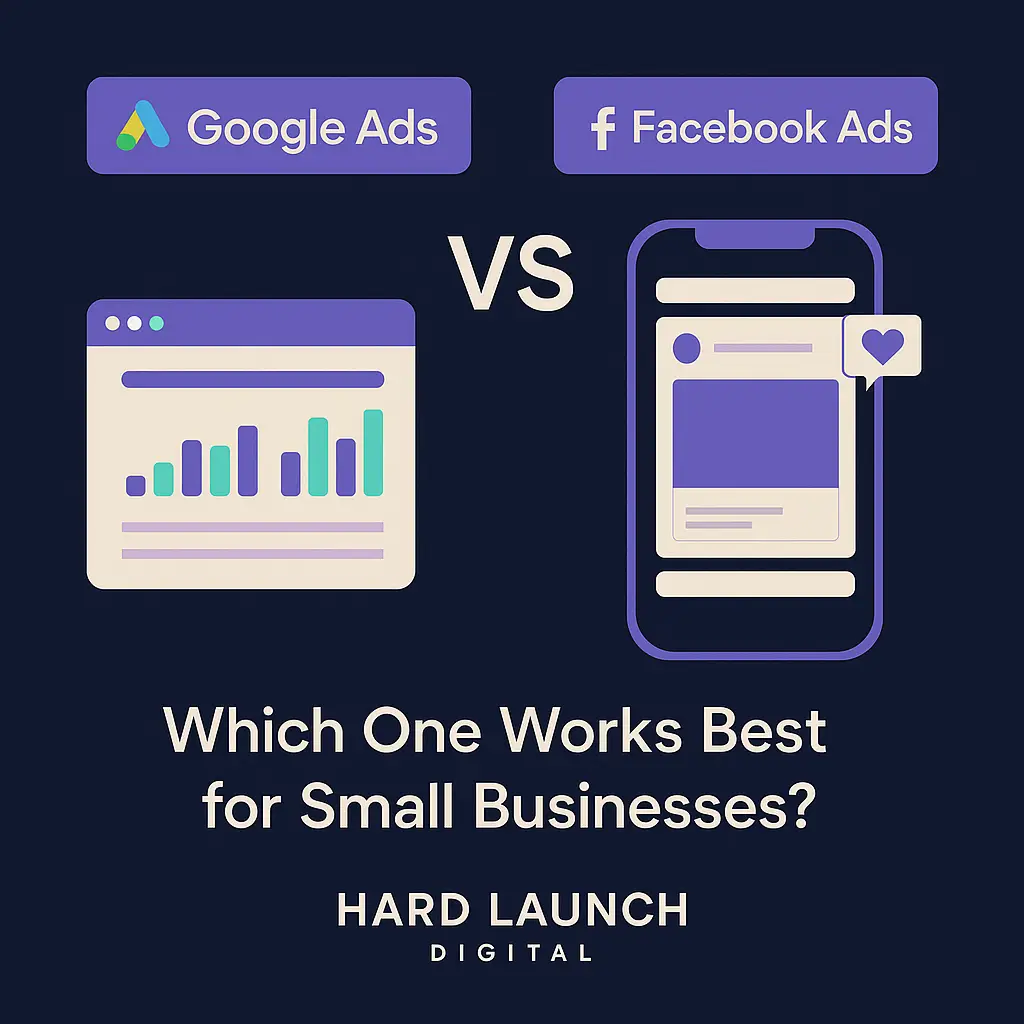
Should I run Google Ads or Facebook Ads?
Both platforms can drive serious results – but they work differently, and choosing the right one depends on your goals, industry, and audience.
Let’s break down the differences, strengths, and how to pick the right ad strategy for your business.
Google Ads: Intent-Based Targeting
Best for:
-
Leads from people actively searching for your service
-
Local businesses with urgent or time-sensitive offerings (e.g. HVAC, med spas, legal, financial services)
Strengths:
-
Targets people actively looking for what you offer
-
Shows ads at the exact moment of intent
-
Strong for lead generation and conversions
-
Highly measurable and scalable
Drawbacks:
-
Can be competitive and costly for high-demand keywords
-
Requires strong landing pages and conversion tracking
Example:
Someone types “Denver bars” – your ad shows up at the top of Google. That’s a red-hot lead.
Facebook (Meta) Ads: Interest-Based Awareness
Best for:
-
Building brand awareness
-
Engaging audiences through storytelling or lifestyle visuals
-
Products/services people may not be actively searching for yet
Strengths:
-
Visually engaging (great for image & video)
-
Ideal for retargeting and nurture sequences
-
Can grow followers, website visits, and awareness over time
Drawbacks:
-
Users aren’t actively shopping – they’re scrolling
-
Takes longer to convert
-
Requires creative testing and audience refinement
Example:
You run a video ad targeting new business owners in Denver explaining how digital marketing drives ROI. They may not click today – but they remember you tomorrow.
Side-by-Side Comparison
| Feature | Google Ads | Facebook Ads |
|---|---|---|
| Targeting | Search intent | Interests & behaviors |
| Ad Format | Text, display, video | Image, video, carousel |
| Funnel Stage | Bottom (high intent) | Top/Mid (awareness + retargeting) |
| Speed of Results | Faster (esp. for leads) | Slower (needs nurture) |
| Cost per Click (CPC) | Typically higher | Typically lower |
| Best For | Service-based businesses | Brands, offers, long-term awareness |
So Which One Should You Use?
-
Use Google Ads if your goal is direct leads, booked calls, or immediate action.
-
Use Facebook Ads if you’re building a brand, launching something new, or nurturing a broader audience.
Pro tip: The best strategy is often a combo – use Google Ads to capture high-intent leads and Facebook to retarget or stay top of mind.
Final Thoughts
If you’re a small business owner in Denver trying to figure out how to get the best ROI from digital ads, don’t choose one blindly. The right mix depends on your goals, budget, and customer journey.
At Hard Launch Digital, we help businesses build custom strategies using the right channels — not just the trendiest ones.